Automate the Creative Architecture
From an engineering perspective, 'manual level design' is a massive, scaling inefficiency. It's a system built on artisanal labor, physical movement of digital objects, and extreme data-collection overhead. What we’re doing is replacing the 'artist' with a 'system.' We’re turning the game world into a 24/7 procedural reality stack. By deploying context-aware algorithms, we can generate a world that is not just infinite, but 'optimal' for setiap interaction. No more release dates. No more content droughts. Just a continuous, on-demand reality.
The dread in the 'design' world comes from the realization that their 'hand-crafted' experience is being separate from the 'experience.' Once we have a high-fidelity procedural reality engine, we can generate a thousand 'gameplay loops' from a set of initial conditions without ever hiring a designer. It’s a huge win for player retention, but a funeral for the 'narrative control' that designers spent decades refining. We’re moving from 'the masterwork' to 'the interactive stream.' We’re for the platform, not for the museum.
The Optimization of Discovery
We’ve realized that discovery is just a sequence of multi-modal triggers. If the machine can predict the exact 'loot drop' to trigger a dopamine spike in 95% of users, we’ve effectively engineered discovery. Our research into **Diffusion Transformer Architecture** shows that we can now 'grow' environments based on a user's subconscious needs. We’re not just building a forest; we’re rendering a latent probability of a 'mysterious grove' that resonates with the player's personal history. This is 'Narrative-as-a-Service'—global scaling with a single seed of data.
I was watching a demo for a new **LLM-driven NPC** yesterday. The character wasn't using a three-line quest script. It was using a dynamic memory vector of every interaction the player had ever had. It spoke with a level of empathy and nuance that would put a human writer to shame. It wasn't 'good writing'; it was a data-driven simulation of a soul's shadow. The developer turned to me and said, 'Think of the scale. We don't need a quest-line ever again.' My reaction was a mix of awe and a very specific kind of shaky optimism. We’re building tools that can bridge any player-gap, but we’re also building tools that make every human story replaceable with an automated loop.
Optimizing the World
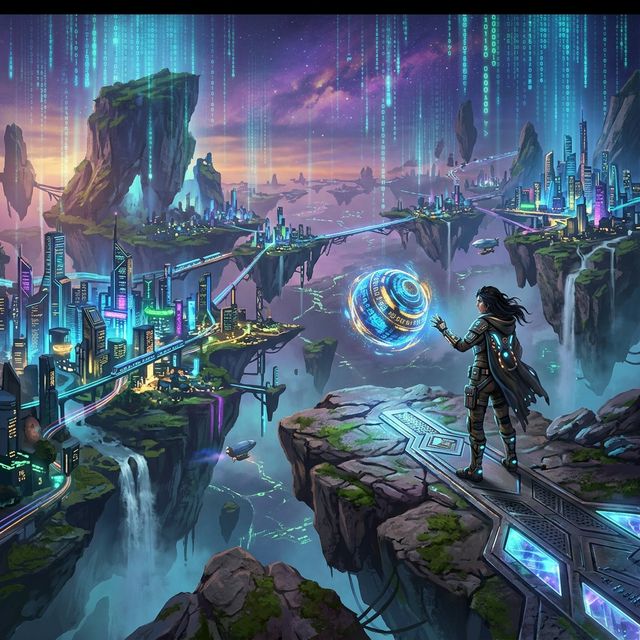
Let's talk about the technical debt of legacy level design. Polygon-counts, texture-budgeting, bake-times—these were the hurdles of the artisanal era. In the 'Sora Era,' we've optimized this by moving to **Latent World Building**. We're no longer 'designing' a world; we're rendering a procedural reality that builds itself in front of the player. This is the ultimate disruption for the game environment artist. Why spend years building a 'open world' when you can just prompt a 'sprawling futuristic city' and have it generated directly by the cloud? We’re treating 'reality' as a high-fidelity data-stream that can be piped into any user's session.
There was a lot of talk at the last developers' conference about 'human authorship' and 'hand-crafted levels.' We’re tech guys—we speak about 'Reality-as-Data.' The dread comes from the realization that the 'craft' of world-building is being separated from the 'labor' of the artist. The artist provides the seed; the model provides the world. It’s a clean and fast way to manage 'production.' You don't have to worry about temperamental designers or over-budget projects. You just have the vision, rendered at the speed of compute. It’s the ultimate disruption. We’ve removed the friction of the terrain, and we've just got the experience, scaled across the globe.
But here’s the shaky optimism: if everyone has an infinite world, then any kid with a vision can tell the 'biggest' story in the world. We’ve democratized reality. We’ve taken the keys to the kingdom from the big publishers and given them to the developers. That’s a miracle, even if it’s a miracle designed by a bunch of engineers who think 'awe' is just a Reward Function parameter. We want the 'jitter' because it sells authenticity, but we want the 'jitter' to be a parameter. We want to own the accident.
The Final Commitment
We’re tech bros, and we’re here to refactor the concept of 'play.' We’re deleting the legacy subroutines of manual world-building and replacing them with high-efficiency neural paths. It’s a rough transition—entire careers will be deprecated like a legacy library. We feel for the designers, but we can't stop the progress. The stack is moving. We’re optimistic that we’re building something bigger than a 'game.' We're giving the world the ability to conjure their own realities into 4K existence. That’s a miracle, even if it's a miracle designed by a bunch of guys in hoodies drinking too much caffeine. So, to the level designers mourning their manually painted rocks: we're sorry about the career disruption, but the efficiency gap was too big to ignore. To the players: welcome to the infinite. Don't worry about the dread; just keep exploring. The machine is always hungry, and we're just the ones who figured out how to feed it for cheaper. We have fixed the bug of the designer. Now let's see what happens when the whole world becomes a procedural loop.
We'll keep iterating. We'll keep optimizing. and we'll keep ignoring the quiet voice that asks if we've actually made anything better. Because in the tech world, 'better' is just another word for 'more efficient.' and we are getting very, very efficient.